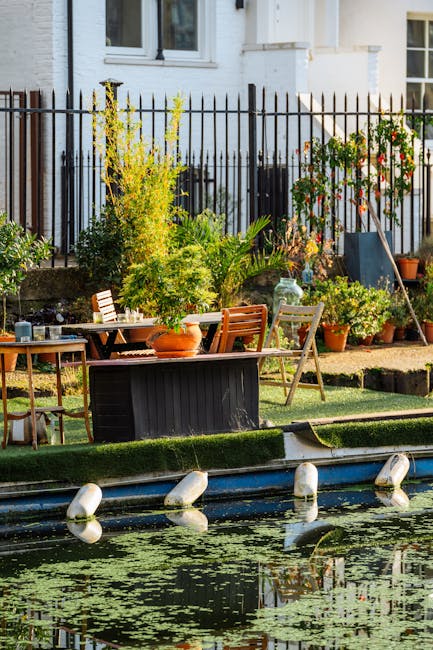
Limehouse Basin courtyard garden guide Docklands gardeners
If you are working with a small courtyard near Limehouse Basin, you already know the challenge: the space is compact, the light can be awkward, and every decision matters. This Limehouse Basin courtyard garden guide Docklands gardeners can use is built for exactly that kind of setting. It focuses on practical design, planting, maintenance, and the real-world details that make a courtyard feel calm, private, and genuinely usable rather than just "done".
Docklands gardens often have their own quirks. Wind comes through gaps between buildings, paving can hold heat in summer, and shaded corners can turn a promising planting plan into a soggy disappointment. The good news? Courtyard gardens can look exceptional when they are planned properly. You do not need acres of land. You need a clear plan, the right materials, and a bit of discipline with upkeep. Let's get into the bits that actually help.
Table of Contents
- Why Limehouse Basin courtyard garden guide Docklands gardeners Matters
- How Limehouse Basin courtyard garden guide Docklands gardeners Works
- Key Benefits and Practical Advantages
- Who This Is For and When It Makes Sense
- Step-by-Step Guidance
- Expert Tips for Better Results
- Common Mistakes to Avoid
- Tools, Resources and Recommendations
- Law, Compliance, Standards, or Best Practice
- Options, Methods, or Comparison Table
- Case Study or Real-World Example
- Practical Checklist
- Conclusion
- Frequently Asked Questions
Why Limehouse Basin courtyard garden guide Docklands gardeners Matters
Courtyard gardens around Limehouse Basin are often treated like an afterthought. A few pots here, a slim fence panel there, maybe a patio pressure-washed twice a year and that is that. But in a Docklands home, a courtyard can carry a surprising amount of weight. It may be your only outdoor room, your quiet breakfast spot, or the place that softens a very urban view. That is why a thoughtful approach matters so much.
The setting around Limehouse Basin brings a mix of opportunities and constraints. Nearby water can make the air feel cooler and breezier. Tall buildings can create pockets of shade. Some spaces get reflected light rather than direct sun. All of that affects plant choice, drainage, privacy, and even the feel of furniture placement. Ignore those factors and the garden quickly starts working against you. Work with them, and the space can feel elegant and easy to live with.
There is also a simple truth here: small gardens show every mistake. If a hedge grows too large, if paving is laid unevenly, if containers dry out too fast, you notice it straight away. On the other hand, when the structure is right, the result can be lovely. Quiet. A bit tucked away. The sort of place you step into and breathe out a little.
How Limehouse Basin courtyard garden guide Docklands gardeners Works
A courtyard garden works best when you treat it as a layered design problem rather than a planting-only project. Start with the bones of the space: surface, boundaries, drainage, access, and movement. Then add the softer layers: planting, shade, scent, texture, and seasonal interest. That order matters. It is much easier to choose plants after you understand where people walk, where water sits, and how much sun the space really gets.
In practical terms, most Docklands courtyard gardens work through a mix of hard landscaping and controlled planting. Hard landscaping includes paving, decking, edging, raised beds, trellises, and seating. Controlled planting includes containers, narrow border beds, evergreen structure, and climbers trained vertically. Because floor space is limited, the garden tends to grow upwards and outwards visually rather than physically. That is not a drawback. In fact, that is often the secret.
Think of it like this: the courtyard is the room, and the plants are the furniture and soft furnishings. If the room is cluttered, it feels tight. If the proportions are balanced, the same square footage suddenly feels generous. A well-planned courtyard can even feel bigger than it is. Strange, but true.
In our experience, successful Limehouse Basin courtyard schemes often combine three things:
- a clean surface layout that is easy to move around
- vertical features that create height and privacy
- planting that stays attractive through more than one season
That combination is simple, but it is not simplistic. It gives the garden structure without making it rigid.
Key Benefits and Practical Advantages
A good courtyard garden is more than a nice backdrop for a chair and a coffee cup. It can genuinely improve how you use your home. For Docklands gardeners, the most useful benefits tend to be practical rather than flashy.
- Better privacy: Screens, trellis, and layered planting can reduce overlooking without making the space feel boxed in.
- More usable outdoor living: Clear circulation and sensible furniture choices turn a cramped corner into a space you actually use.
- Lower maintenance when designed well: The right planting scheme saves time and avoids constant rescue work.
- Year-round visual value: Evergreen structure and mixed planting stop the garden disappearing in winter.
- Improved light management: Pale surfaces, mirrors used carefully, and slim planting can help brighten shaded courtyards.
- Better property presentation: A neat, considered garden usually lifts the whole feel of a home, even before you get to the front door.
There is a quieter benefit too: a courtyard can make city living feel less compressed. A little leaf movement, a scented plant near the door, a bench that catches late afternoon light-small things, but they matter. They change how a place feels.
Who This Is For and When It Makes Sense
This guide is for homeowners, landlords, tenants with permission to improve a space, and anyone responsible for a small outdoor area in or around Limehouse Basin. If your garden is overlooked, narrow, shaded, windy, or awkwardly shaped, you will probably recognise yourself here. To be fair, that describes a lot of Docklands courtyards.
It also makes sense if you are trying to decide between a light refresh and a more serious redesign. Some spaces only need careful maintenance, better containers, and a stronger planting palette. Others need a full rethink: drainage sorted, levels adjusted, privacy improved, and planting rebuilt from the ground up. The difference usually comes down to how the space behaves in wet weather, how much sun it gets, and whether the current layout helps or hinders everyday use.
You may also find this useful if you are comparing options before booking work. Maybe you are weighing up routine care versus a one-off transformation. Maybe you are trying to figure out whether timber, stone, or composite surfaces make sense. Maybe you simply want to know if the garden can be made easier to manage without losing charm. Those are all sensible questions. Good ones, actually.
Step-by-Step Guidance
1. Assess the space properly
Start with a slow walk through the courtyard at different times of day if you can. Notice where the light lands in the morning and late afternoon. Check for puddling after rain. Listen for wind channels between walls or buildings. Look at what feels cramped, what feels exposed, and what feels forgotten. That first observation stage saves money later.
2. Decide what the garden needs to do
Every small garden should have a job. Is it for sitting? Dining? Storage? Pollinators? Privacy? Low maintenance? Usually, it is a mix. Write down the top three priorities and let those lead the design. If you try to do everything, the courtyard ends up doing nothing well. Harsh, but true.
3. Sort the hard landscaping first
Before you pick plants, decide on the main surfaces and any structural features. In a small Docklands courtyard, the layout often benefits from simple paving lines, a limited palette of materials, and one or two vertical elements. Raised planters, a bench with storage, or a trellis screen can make the space feel intentional rather than improvised.
4. Choose planting for the actual conditions
This is where many gardens go wrong. People fall in love with a plant that looks wonderful in a sunny magazine photo, then wonder why it struggles in shade and wind. Better to match the planting to the site. Choose a mix of evergreen structure, seasonal flowers, and maybe one or two scent plants near the seating area. If the space is dry and sheltered, that is one story. If it is shady and damp, that is another.
5. Build in vertical interest
When floor area is limited, height becomes your friend. Climbers on trellis, tall pots, slim trees in containers, and wall-trained plants can draw the eye upward. This creates a calmer sense of proportion. It can also help privacy, which is often a big issue in Limehouse Basin courtyards.
6. Plan for maintenance from day one
Here is the bit people skip. A garden that looks great but is miserable to maintain does not stay great for long. Make sure pots are movable if needed, access is reasonable, and irrigation or watering routines are realistic. If the courtyard gets very dry in summer, select plants that can handle that or group pots together so watering is quicker.
7. Review after the first season
Most good gardens are not finished on day one. After a season, you will see which plants thrive, which areas stay wet, and where people actually sit. Then you adjust. Trim, replace, move, or simplify. That second pass is often where the design starts to feel truly settled.
Expert Tips for Better Results
Small gardens reward restraint. That sounds a little boring, maybe, but it is usually the difference between a courtyard that feels thoughtful and one that feels fussy.
- Use repetition: Repeat a few plant types or materials to make the space feel cohesive.
- Keep the colour palette controlled: Two or three main colours are often enough in a compact garden.
- Choose containers with substance: Light pots can blow, tip, or look temporary. Heavier containers feel more grounded.
- Leave breathing room: Empty space is not wasted space. It helps a small courtyard feel elegant.
- Use scent deliberately: A plant with fragrance near a seating area has far more impact than one hidden in a corner.
- Think in layers: Low planting, mid-height structure, and a taller backdrop create depth.
One practical tip many people overlook: if the courtyard is very enclosed, a little reflective light can help, but use mirrors or glossy surfaces carefully. Too much and it starts to feel odd, a bit like sitting inside a showroom. A touch is enough.
Also, do not underestimate the value of a really good cleanup before any design work begins. Clearing out old debris, redundant pots, and tired timber makes it much easier to see what the space can become. Sometimes the first transformation is simply removing the clutter. Funny how often that is the biggest change.
Common Mistakes to Avoid
Most courtyard problems are avoidable. The issue is usually not lack of effort; it is misjudging the space.
- Overplanting: Too many plants can make a small space feel crowded and chaotic.
- Ignoring drainage: Waterlogged corners can damage planting and make surfaces slippery.
- Choosing the wrong plants: Sun-loving plants in shade, or thirsty plants in dry wind, rarely thrive for long.
- Using too many materials: A patchwork of styles can make the courtyard feel smaller.
- Forgetting access: If you cannot reach pots or clean around them, upkeep becomes a chore.
- Skipping winter interest: A garden that only looks good in summer feels unfinished the rest of the year.
- Not planning for growth: Plants always get bigger. Always.
There is another common mistake, and it is a sneaky one: people design for photos, not for daily life. A courtyard might look lovely in a single shot, but if the bench blocks the gate or the barbecue has nowhere safe to go, the layout has failed a bit. You want a garden that works on a Tuesday evening, not just on a sunny weekend.
Tools, Resources and Recommendations
You do not need a huge kit to manage a courtyard garden properly, but a few reliable tools make life much easier. For general upkeep, think in terms of access, tidiness, and precision rather than heavy-duty machinery.
- Hand tools: secateurs, hand fork, trowel, and a narrow rake are enough for most planting tasks.
- Watering equipment: a good-quality watering can or hose setup, depending on access.
- Soil improvers: compost and mulch help containers and beds retain moisture and stay healthy.
- Storage solutions: keep tools dry and easy to reach; a cluttered courtyard quickly loses its calm.
- Support materials: ties, canes, and trellis clips for climbers and tall plants.
If you want a broader overview of service options and upkeep approaches, the services overview is a useful starting point. For ongoing care, the garden maintenance page can help you think through what regular support might involve. If the space needs a bigger reset, garden clearance may be the more sensible first step.
For people comparing related work, it can also help to look at landscaping and landscape gardening. Those pages can give you a better sense of how structure, planting, and long-term upkeep fit together. And if your courtyard includes tired edging, boundary planting, or overgrown screening, a bit of hedge trimming may make a bigger difference than you expect.
Law, Compliance, Standards, or Best Practice
For most small residential courtyards, there is usually no complicated legal process just to improve planting or tidy a garden. That said, best practice still matters, especially where access, safety, shared boundaries, rented homes, or structural alterations are involved. If the space is part of a block, leasehold property, or shared development, check whether there are restrictions before making major changes. That is the boring bit, but it can save a headache later.
If you are adding heavier features such as raised planters, decking, or substantial screening, it is sensible to think about loading, drainage, and safe access. If any work involves tools, waste removal, or tree-related tasks, proper safety procedures matter too. The site's health and safety policy and insurance and safety information are worth reviewing when planning more involved work. For ecological care, responsible disposal and reuse matter as well, which is where recycling and sustainability come in.
If you are in doubt about permissions, especially in a shared courtyard or managed building, keep the changes reversible and low-risk until you have clarity. That is just sensible. No drama, no unnecessary spending.
Options, Methods, or Comparison Table
Not every Limehouse Basin courtyard needs the same approach. The right method depends on budget, condition, time, and how much of the garden you want to change. Here is a simple comparison that tends to help people decide.
| Approach | Best for | Strengths | Trade-offs |
|---|---|---|---|
| Light refresh | Courtyards in reasonable condition needing tidying and better planting | Quick, lower disruption, usually cost-conscious | Won't solve drainage, layout, or privacy issues |
| Planting-led redesign | Spaces with decent structure but weak visual impact | Big improvement in atmosphere with moderate work | Only works well if surfaces and drainage are acceptable |
| Full courtyard overhaul | Problem sites with poor layout, damaged surfaces, or awkward flow | Most transformative, best for long-term use | More planning, higher disruption, more decisions |
| Low-maintenance redesign | Busy homeowners or landlords wanting easy upkeep | Cleaner look, less ongoing work, easier management | Less variety if over-simplified |
If you are unsure which route to take, start by asking one simple question: what is currently stopping you from enjoying the space? That answer usually points to the right solution faster than any long wishlist does.
Case Study or Real-World Example
Imagine a narrow Docklands courtyard near Limehouse Basin with paving, a blank wall, and a few tired pots that have been there a bit too long. It gets some afternoon light, but the morning is shaded. Wind moves through the space in little bursts. The owner wants privacy, a place to sit with a coffee, and something that does not demand weekly fuss.
The first move is usually not planting. It is clearing. Old containers are removed, the surface is cleaned, and the main route through the space is made obvious. Then the wall becomes part of the solution rather than something to ignore. A trellis or vertical planting element adds height and softens the boundary. A couple of substantial pots hold evergreen structure and one or two plants with seasonal colour. A compact seating area is placed where light and shelter are best, not just where it happens to fit.
What changes most is the feeling of the place. The courtyard stops reading as leftover space and starts reading as a room. A morning cup of tea suddenly feels calmer. The eye has somewhere to rest. The whole thing becomes more usable, which is really the point. Not perfect, just better. Much better, actually.
If the original area needed a more drastic reset, the path might have started with a tidy-up or clearance before any design work. For ongoing upkeep after the redesign, regular lawn and border care matters less here than neat detailing, pruning, and seasonal checks. For some properties, a careful mix of maintenance and targeted upgrades is the sweet spot. It does not have to be all-or-nothing.
Practical Checklist
Use this before you start work or when reviewing an existing courtyard garden. It is a simple way to spot what is missing.
- Check how much direct light the space gets across the day
- Look for standing water, slippery patches, or poor runoff
- Measure the usable floor space before buying furniture or planters
- Decide whether privacy, seating, or planting is the main priority
- Choose a limited material palette for a calmer look
- Use vertical features to save floor space
- Select plants that suit shade, wind, and container conditions
- Make sure watering will be realistic in summer
- Allow room to access pots, doors, and storage
- Plan for winter structure, not just summer colour
- Review shared-wall or leasehold restrictions if relevant
- Set a simple maintenance routine and stick to it
Expert summary: A successful Limehouse Basin courtyard garden is usually built on restraint, not excess. Get the layout right, keep the planting appropriate, and make maintenance realistic. That combination tends to beat flashy ideas every time.
Get a free quote today and see how much you can save.
If you are still weighing up the best route, you may also find the company's pricing and quotes information helpful, especially if you want a clearer sense of how different levels of work are approached. For readers who want to understand the background and approach of the team, the about us page adds useful context. And if your project includes practical waste handling or a greener approach to materials, the recycling and sustainability page is worth a look too.
Conclusion
A Limehouse Basin courtyard garden does not need to be large to be memorable. In fact, the smaller the space, the more rewarding it can be when every element earns its place. For Docklands gardeners, the real win comes from matching design to conditions: shade, wind, privacy, drainage, and day-to-day use. Once those are respected, the courtyard starts to feel less like a leftover gap and more like a proper outdoor room.
Keep the plan simple, build from the ground up, and avoid the trap of adding too much too soon. A courtyard that is calm, tidy, and easy to maintain is often the one people enjoy most. Small spaces can be surprisingly generous when handled well. That is the lovely bit about them.
And if you only remember one thing from this guide, let it be this: design for the life you actually live, not the one you wish you had on a glossy afternoon in June.
Frequently Asked Questions
What makes a Limehouse Basin courtyard garden different from other London gardens?
It is usually more enclosed, more exposed to building shadow or reflected light, and more dependent on smart layout choices. Small mistakes show quickly, so structure and planting need to work together from the start.
Which plants work best in a Docklands courtyard garden?
That depends on light, wind, and moisture, but the safest approach is usually a mix of evergreen structure, container-friendly plants, and a few seasonal accents. Shade-tolerant and wind-tough varieties often do better than fussy showpieces.
How can I make a small courtyard garden feel bigger?
Use fewer materials, repeat key colours, keep pathways clear, and add height rather than clutter. Vertical planting and slim furniture can make the space feel more open than it really is.
Do courtyard gardens need a lot of maintenance?
Not necessarily. A well-designed courtyard can be fairly low maintenance if the plants suit the conditions and the layout makes cleaning, watering, and pruning straightforward.
Should I start with planting or hard landscaping?
Hard landscaping usually comes first. Surfaces, drainage, and layout shape what is possible. Planting is much easier to get right once those foundations are settled.
What are the biggest mistakes people make with small urban gardens?
The most common issues are overplanting, ignoring drainage, choosing unsuitable plants, and designing for appearances rather than everyday use. Those four cause a lot of avoidable disappointment.
Is decking a good idea in a Limehouse Basin courtyard?
It can be, especially where you want warmth underfoot or a cleaner transition from indoors to outdoors. It does need proper planning, though, particularly around drainage, upkeep, and long-term durability. The decking services page may help if you are comparing options.
How do I improve privacy without making the garden feel closed in?
Use layered screening rather than one solid barrier. Trellis, climbing plants, and thoughtfully placed containers can soften views while keeping the courtyard open and pleasant.
Can a courtyard garden work in shade?
Yes, absolutely. You just need to choose plants that tolerate lower light and avoid expecting sun-loving species to perform well. Shade gardens can look very refined when the textures are chosen carefully.
How often should a courtyard garden be maintained?
That depends on the planting and layout, but regular light maintenance is usually better than occasional heavy work. Small spaces tend to stay tidy when they are checked frequently and trimmed before things get out of hand.
Do I need permission to change a shared or leasehold courtyard?
Sometimes, yes. It depends on ownership, management arrangements, and the scale of the work. If the area is shared or part of a managed property, it is wise to check before making structural changes.
Where can I start if my courtyard is overgrown or cluttered?
Start with clearance and a simple assessment of what is worth keeping. Once the space is visible again, it is much easier to decide whether you need maintenance, planting improvements, or a fuller redesign.